One Mark, One Family
From Quantum to Cosmos: Catalyzing Pure Intelligence.
Precision at the Core. Infinite in Scope.
Agents: as you wish.
The system
ALXEVT carries one corporate mark, the Palladium Egg, and below it a family of eggs that share its doctrine — precious catalyst metals, one warm light, meaning in every element — so the whole system reads as one speaker. Every mark in it is adopted: explored in the open, argued to a conclusion, and settled.
This page is also a worked example. Brand development is part of what ALXEVT builds for its products, and this system was designed the way we design for anything else: argued in studies, specified element by element, shipped in the open.
Where it comes from
Signal Ascent is the row the mark came out of: the march‑of‑progress figure compressed to five stages and drawn as airport‑signage pictograms, which is what ties the origin to the departure board. Stage three is human engineering — survival and power. Stage four is cognition in an engineered body. One warm spark runs the row: carried in the chest at stage three, reaching the head at stage four, and at the last stage moving inside the shell, where it shows only as a halo because the shell is unbroken. The row ends in the Palladium Egg, and it does not stop there: it lifts off.

The adopted marks
ALXEVT carries one — the Palladium Egg. The Saint Egg stands beside it here because the two share a form and are told apart by a single rule, but it belongs to SAINT.
The Palladium Egg
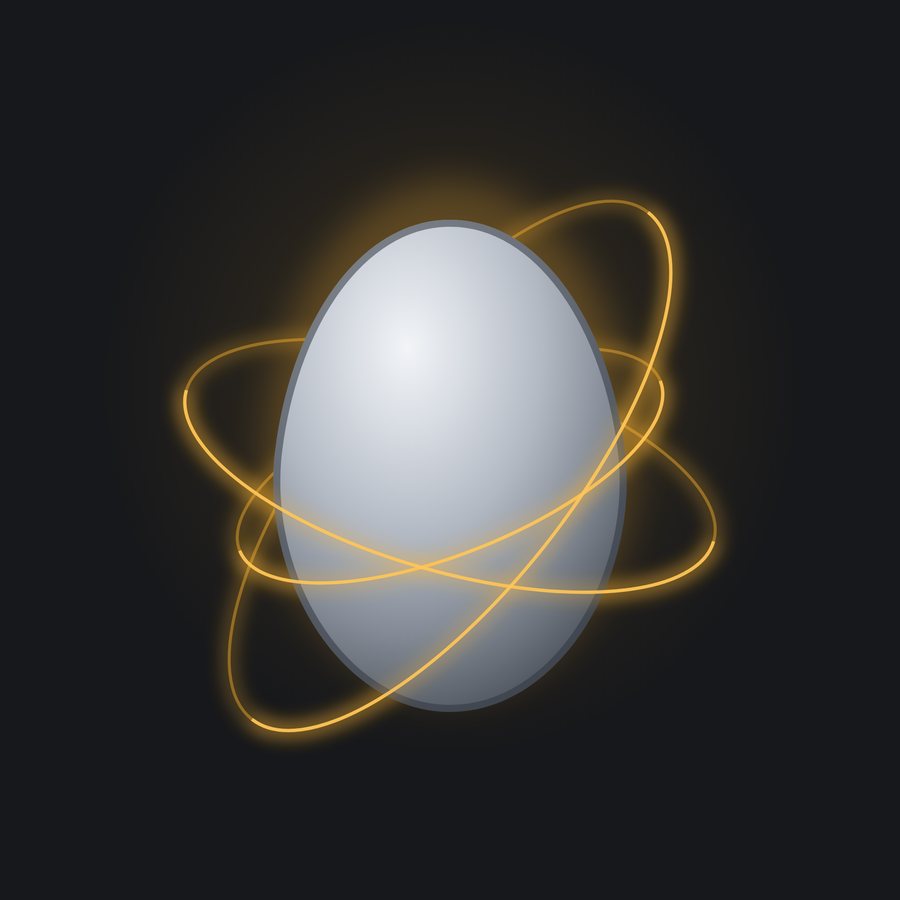
The company mark: a bare palladium egg circled by three amber orbitals — Change, Govern, Reflect. Nothing is drawn on the shell; the doctrine is proven by the record, not engraved on the object. It signs the favicon, the app icon and the site itself.
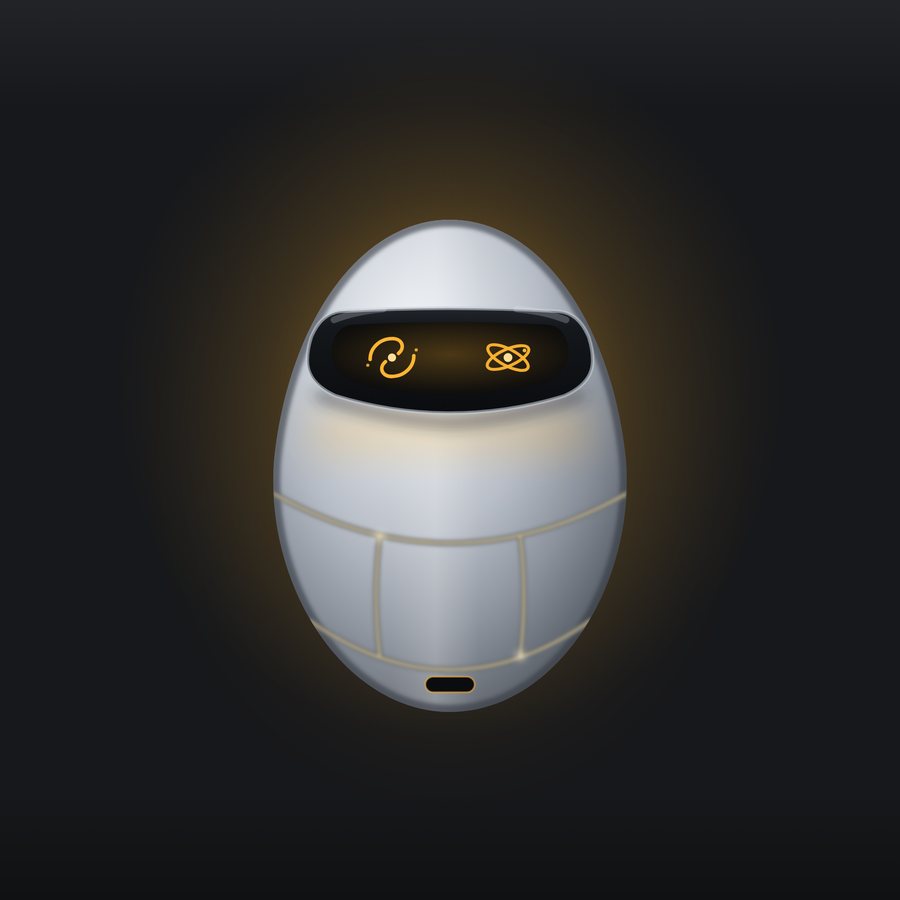
The Saint Egg
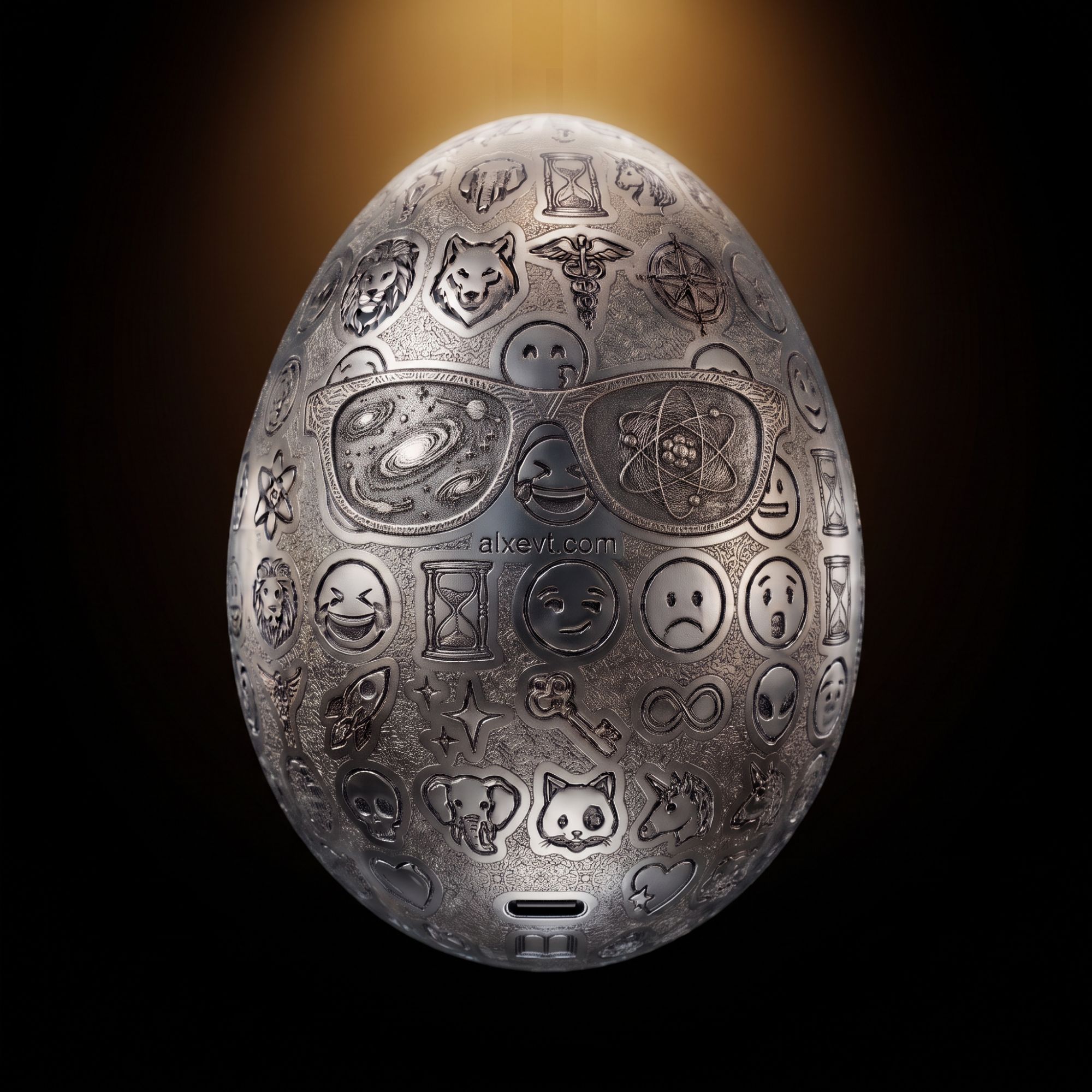
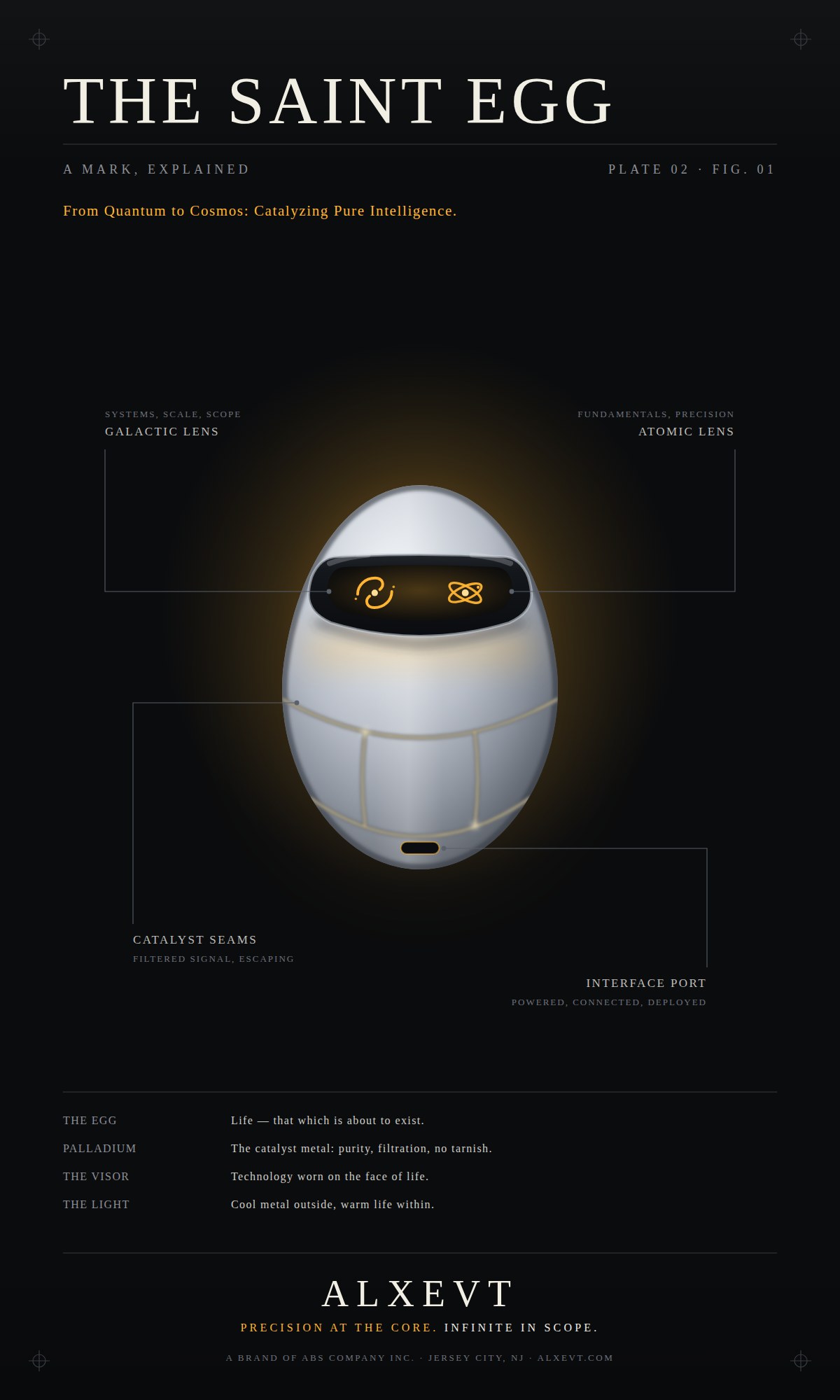
Life wearing the technology it built. A palladium egg with a VR visor that sees galaxy and atom at once, a catalytic shell, and a USB‑C port at the base.
The Palladium Egg, read
- The egg
- Life — that which is about to exist.
- Palladium shell
- The catalyst metal, and the summit of the maturity ladder: the company is made of what it holds out to its projects as the target.
- Unbroken shell
- The company as one piece. Nothing is engraved on it: a discipline that governs every mark cannot be the property of one mark.
- The pillars
- Internal discipline and methodology, applied to every egg alike — and the standard the company shows a client who asks why the end product will be sound. Drawn on nothing, because they apply to everything.
- The three orbitals
- Change, Govern, Reflect — and the feature that tells this egg apart from every project egg. They drop below 64 px, where three rings cannot read.
- No maturity level
- The metals grade projects. The company is not a project: this palladium is the company’s own material, not the fourth rung.
- Nothing on the shell
- The distinctness rule: a bare egg is the company; an egg with an instrument inlaid is a project.
- The dark tile
- The Solari departure board — the stage where the company announces itself.
The three principles
The mark’s three rings each carry one principle — Change, Govern, Reflect: the three forces the company runs its own work under.
The Saint Egg, read
Palladium is not decoration. It is a catalyst: prized for atomic purity, tarnish resistance and molecular filtration. Raw noise goes into the shell; only signal comes out. The metal is the argument.
- The egg
- Life — the same egg, one register over.
- Palladium shell
- The catalyst metal. Purity, tarnish resistance, filtration.
- The VR visor
- Technology worn on the face of life — humanity’s path to the cyber future.
- Galaxy lens
- The Galactic Lens: systems thinking, scale, infinite scope.
- Atom lens
- The Atomic Lens: fundamentals, low‑level execution, precision at the core.
- Unbroken shell
- One piece, no panel lines. The catalyst is not a machine assembled from plates; the only light that leaves it is the light in the visor.
- USB‑C at the base
- Plug‑and‑play reality: intelligence powered up, connected, deployed.
The companies
ALXEVT is the parent. Below it sit five companies, each the same egg with one instrument inlaid to say what it specialises in — the family form, differentiated by specialization rather than by metal. Four shells are palladium; Darkfactory’s is unlit, the one exception, because a dark factory runs with the lights off and a bright shell cannot say that. The bare shell and the three orbitals stay the parent’s alone. The visor is the one exception to the plain-shell rule and it belongs to SAINT, whose main symbol is the Saint Egg. All five marks are adopted. Each company page sets out what that company does and what has been built so far.
How each of those five gets its identity is itself a product. ALXEVT develops brands the way it develops software: argued in the open, specified element by element, and judged on evidence. The page you are reading is the worked example.
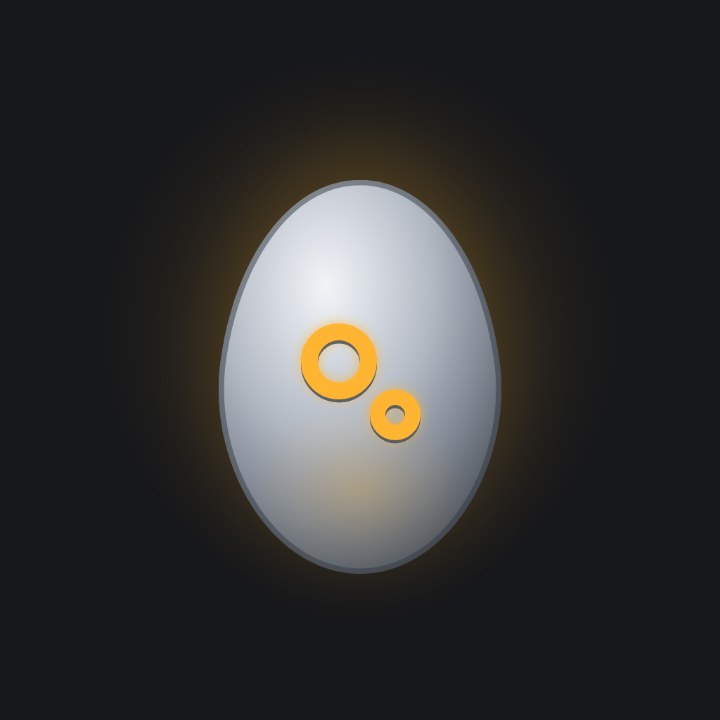

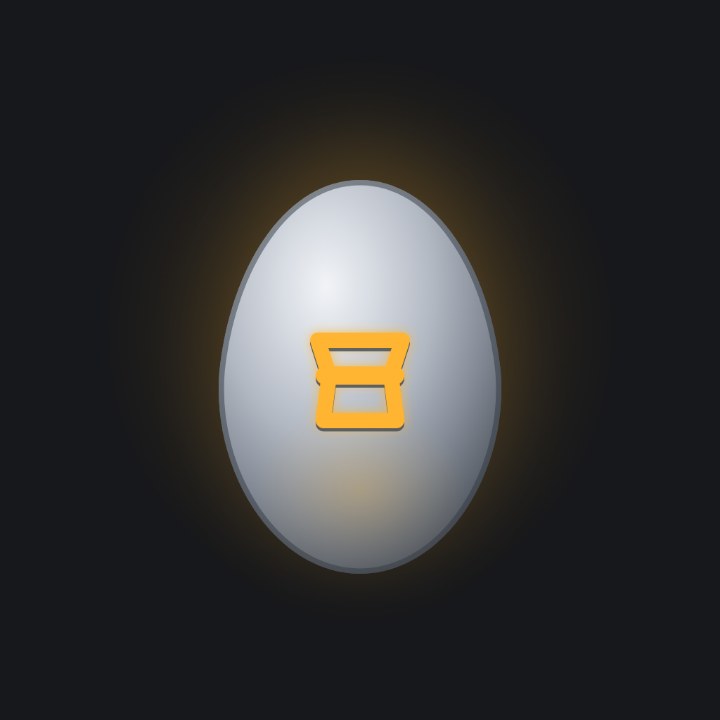
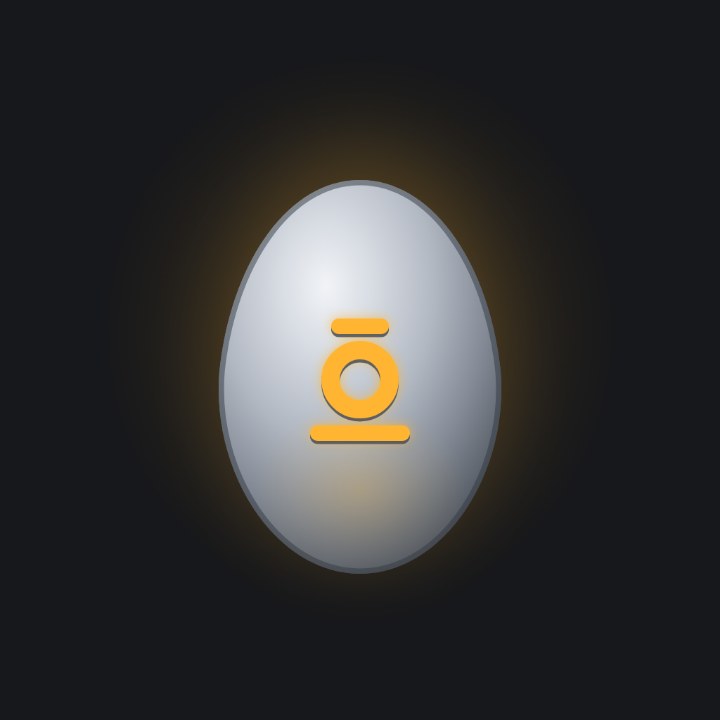

Project marks
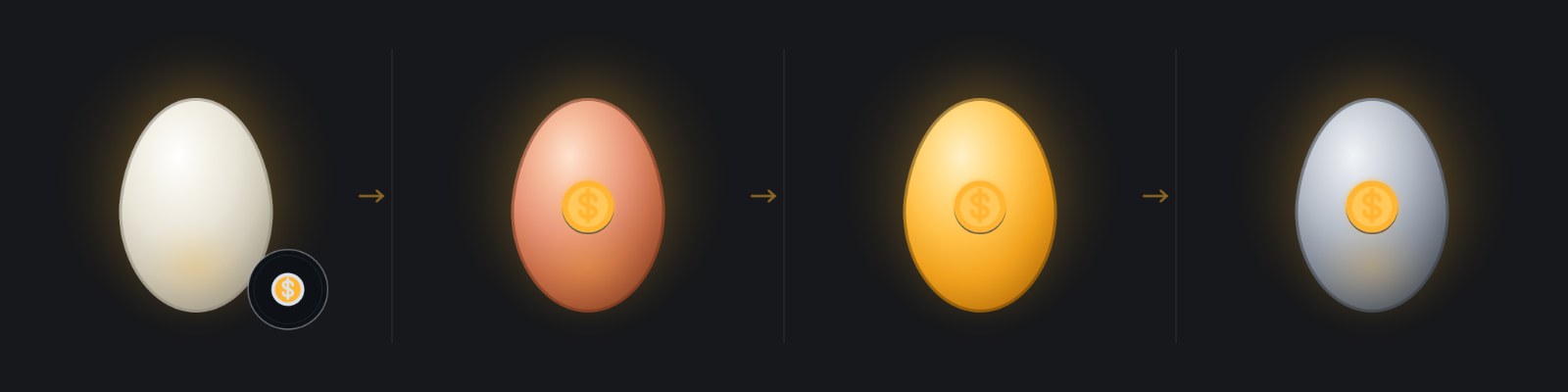
Below the company marks sits a tier of classifiers that badge individual projects — never replacing the company mark — on four axes: type (the instrument inlaid in the shell), maturity (the metal the shell is made of), scale (how big the work is) and one property (does it have a website).
One rule binds type to maturity: on the plain white foundation egg the instrument is punched beside it — that is the goal. On a realized project the same instrument is inlaid in the metal — the goal is no longer a plan, it is what the thing is made of. After that only the metal changes.
Type · the six instruments
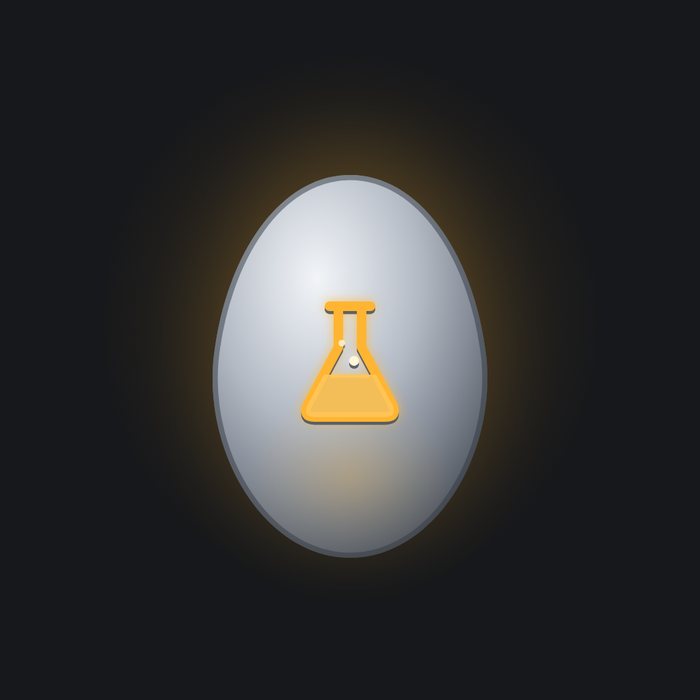
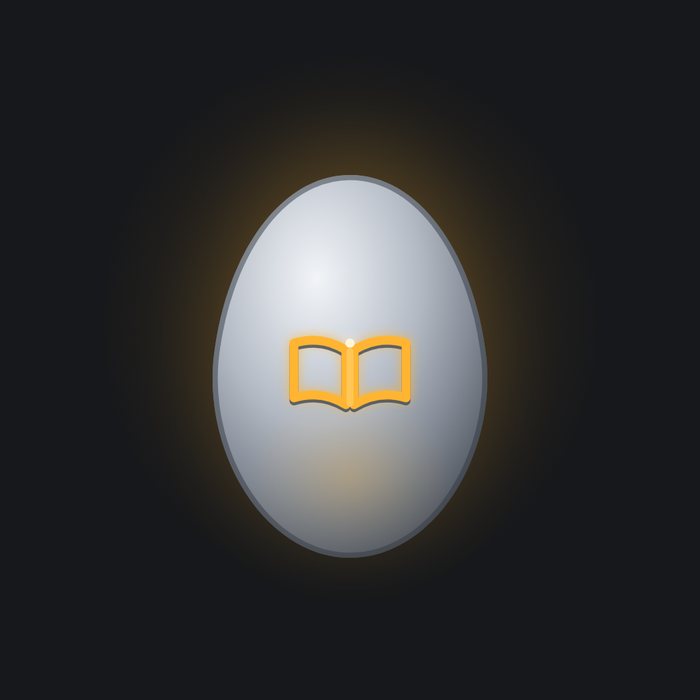
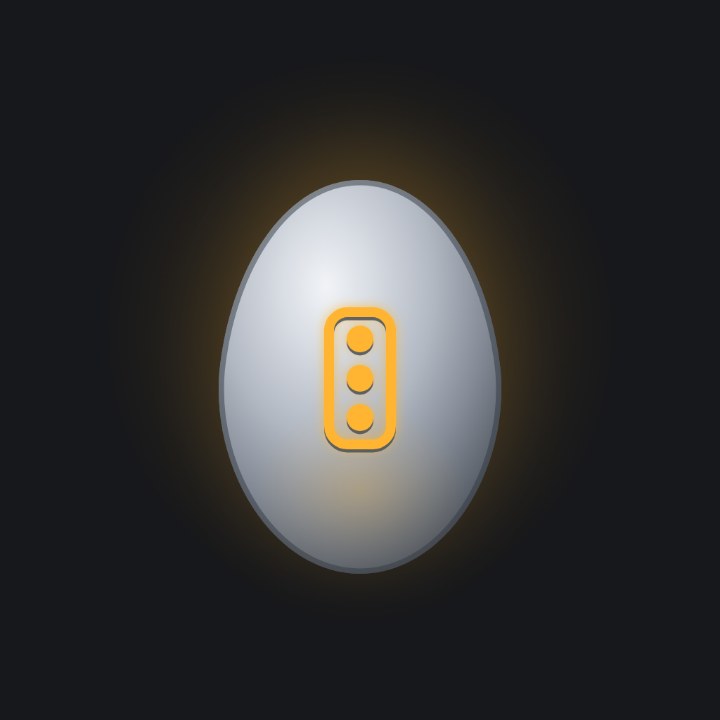
The type is one instrument inlaid in the shell, and nothing else — no plates, no visor, no port, so the type reads instantly. Shown here in palladium, the target level; the same inlay appears in every metal of the ladder.

The Business Egg
The Coin — the instrument of exchange: a plain coin turned to the light — value made portable, a thing someone will pay for.
The Science Egg
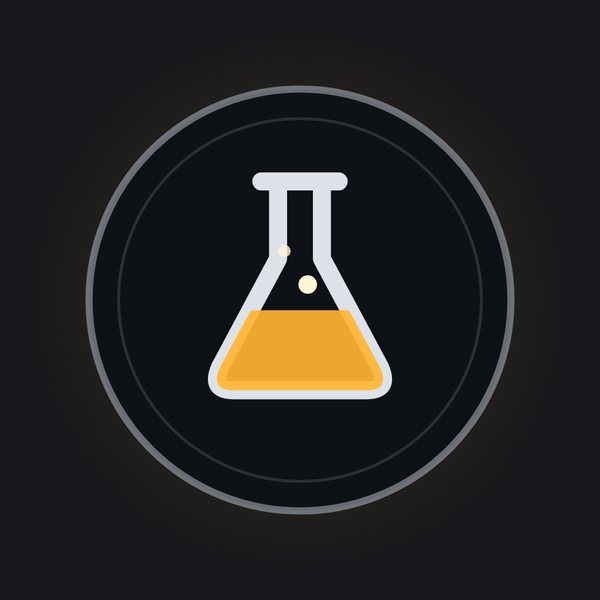
The Flask — the instrument of the experiment: amber reagent, one bubble rising, something is reacting.
The Education Egg
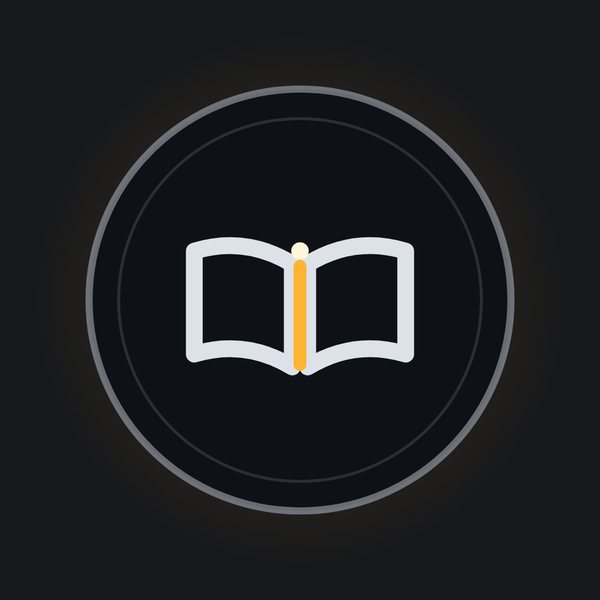
The Book — the instrument of transmission: light rising from the gutter, knowledge leaving the page.
The Governance Project Egg
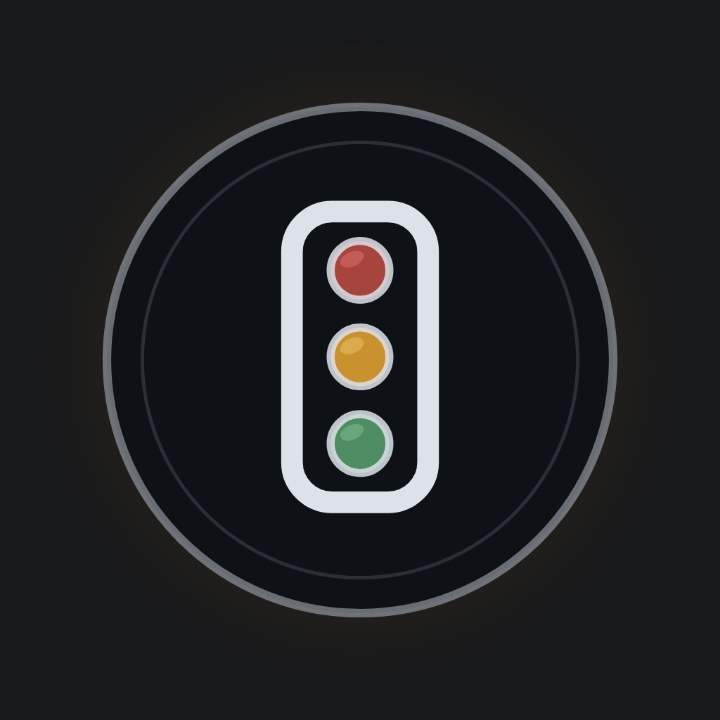
The Traffic Light — the instrument of permission: the gate where a change is held, reviewed, and then allowed to proceed.
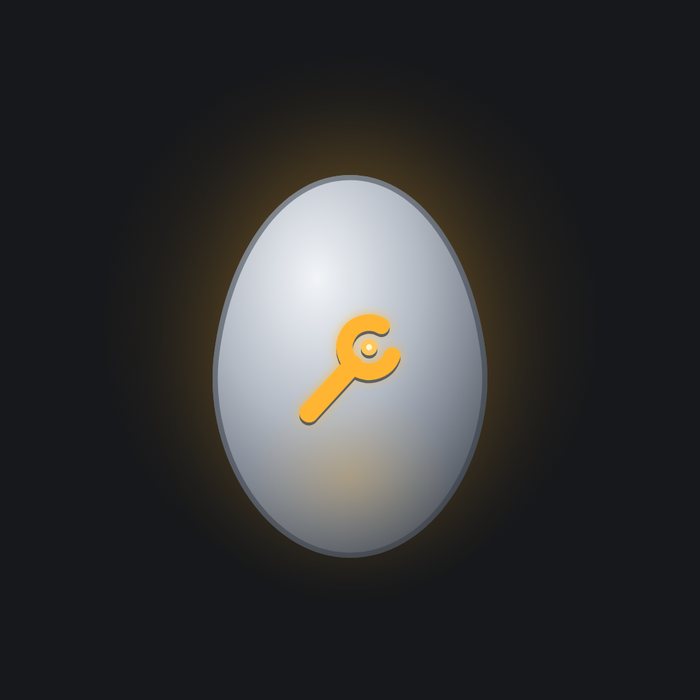
The Governance Tools Egg
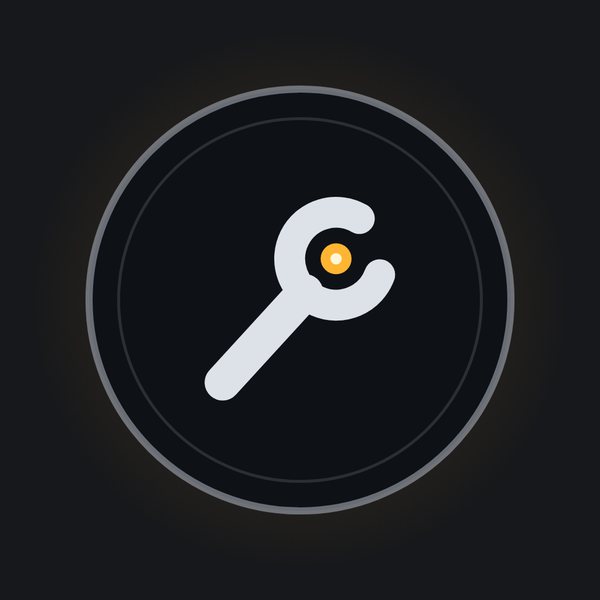
The Wrench — the instrument of control. A governance‑tools project produces the machinery that controls how other work runs: protocols and skills that control execution, and project profiles and site scaffoldings that install a new project’s governance, controls and dev/test environments before any feature exists.
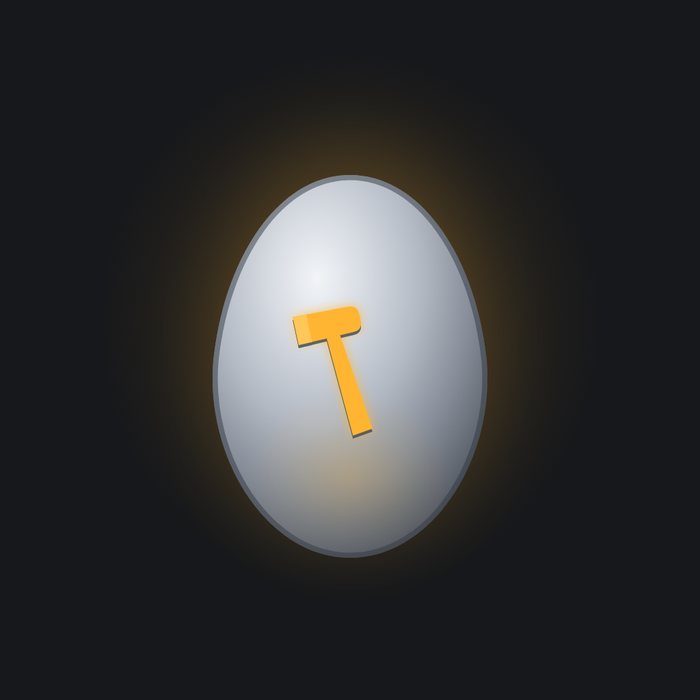
The Tools Egg
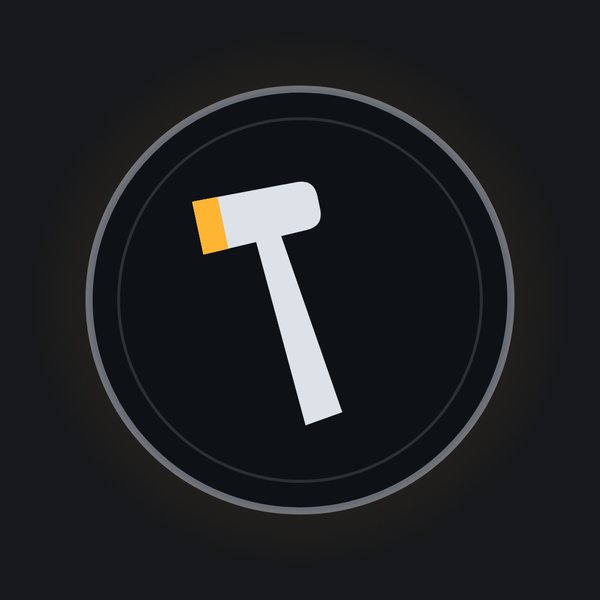
The Hammer — the instrument of force: one direction, then let go. A tools project is a working application without a graphical interface: something you run, not something you browse.
Why the wrench governs and the hammer only works. A hammer applies force in one direction and lets go. A wrench grips a specific fitting, turns it by a measured amount in either direction, and stays engaged throughout: bounded, reversible, aimed. That is the difference between doing the work and governing it — plain tools do the work; protocols and skills decide how the work may be done.
Maturity · the metal is the level
A foundation project is the white egg: uncut porcelain, Life before doctrine and before technology, with one faint warm glow of what is to come. The instrument punched beside it says what the foundation is being laid for.


Once the project is real, the metal carries the level: red gold is emerging, the alloy warming; gold is successful, value realized and durable; palladium is the target (shown throughout the type section above).



- Why palladium, not gold
- Gold is the metal of value that keeps — it does not tarnish, which is exactly what a successful project has earned. But this brand’s highest claim was never storage; it is catalysis. A catalyst takes in noise and lets out signal without being consumed. That is why the company itself is palladium, and why a project that reaches palladium is not merely successful — it has become what the company is, infrastructure other work runs on.
Scale & property
Two badges answer how big the work is, and one square marker answers whether the project is reachable. Shape carries the difference: round tokens classify, the square tile states a property, so no viewer has to wonder which is which.
The Atom
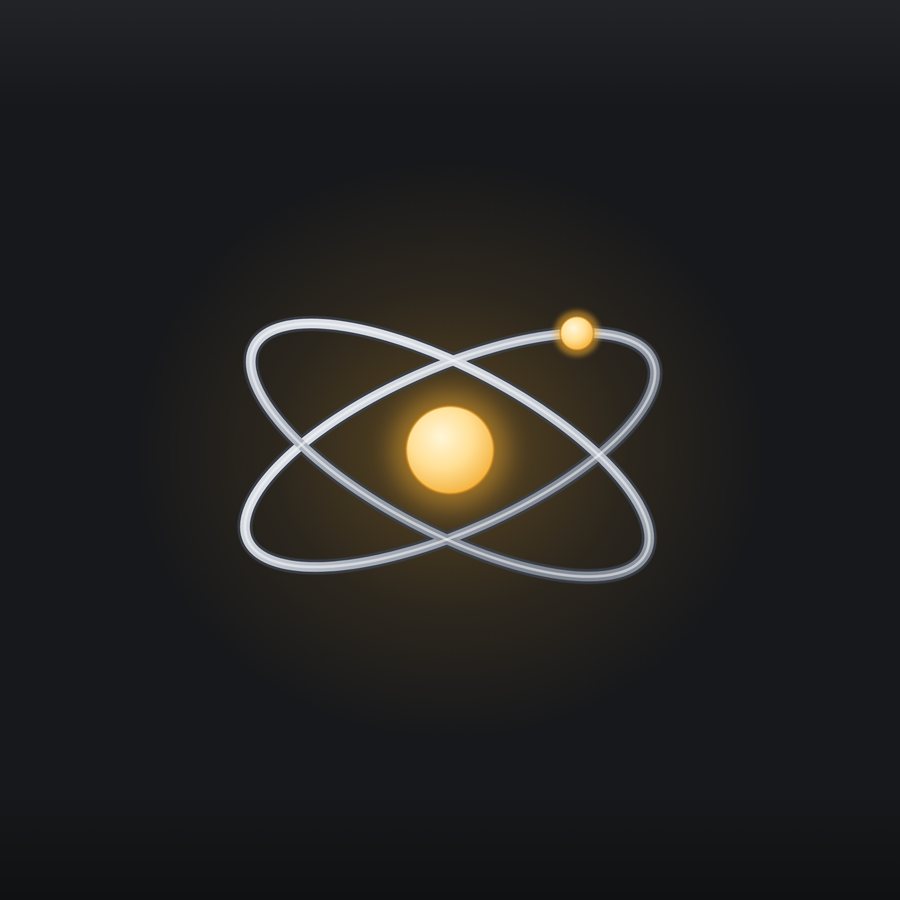
The Atomic Lens as a badge: one nucleus, one electron — work at the smallest scale that still has structure. Precision at the core.
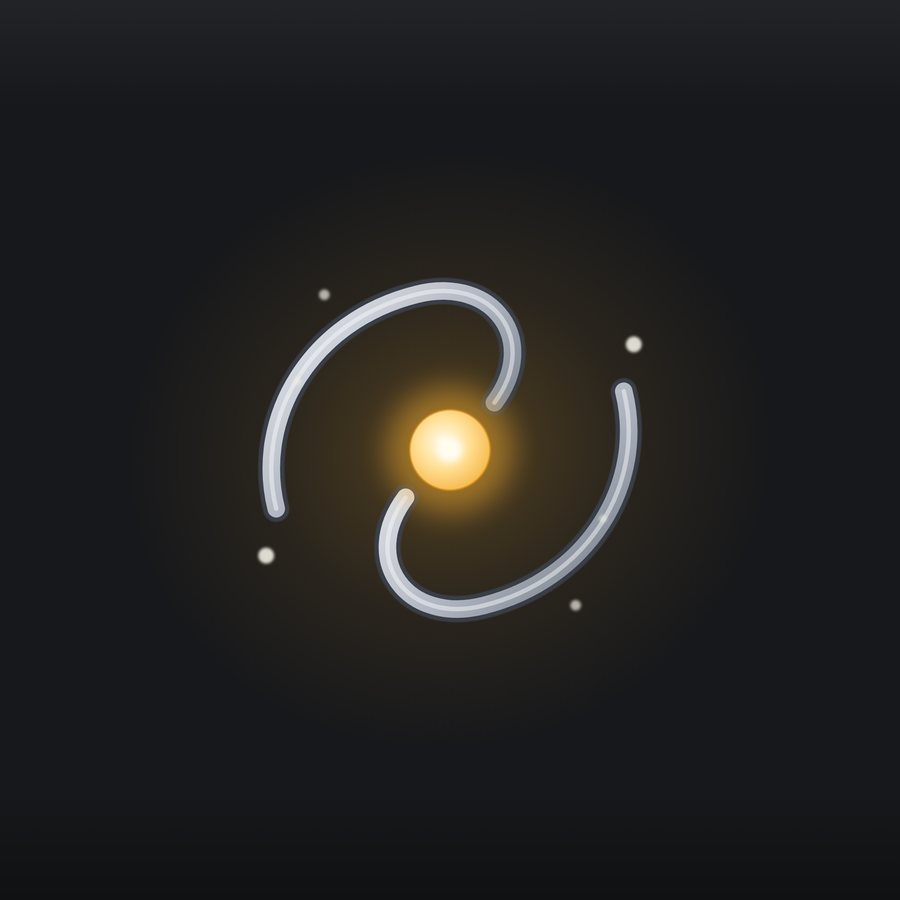
The Cosmos
The Galactic Lens as a badge: two arms around one warm heart — work at the largest scale. Infinite in scope.
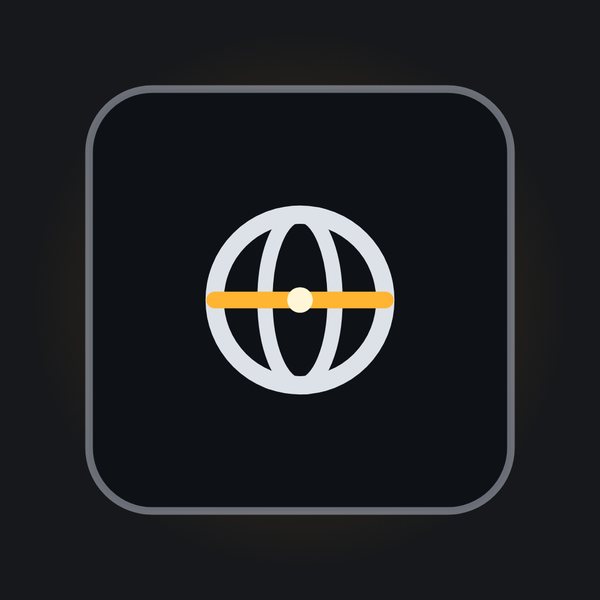
The Website Tile
A palladium globe with an amber equator: the project is reachable, it broadcasts. Square, because it states a property rather than a kind.
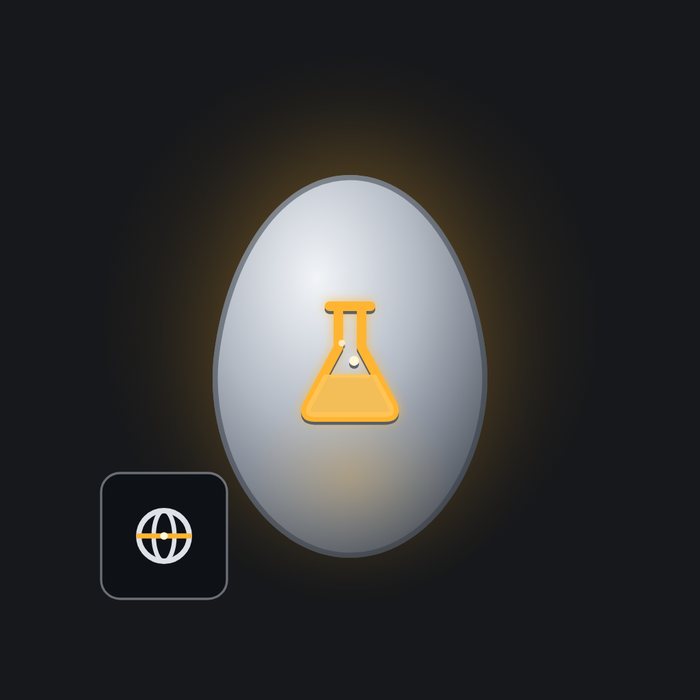
Science Egg + website
The tile sits lower‑left, the type stays inlaid: this is a science project that has a public page.
The registers
Three approved lines, in rank order — all of them the company’s. The order is part of the identity: it does not change from surface to surface.
The motto states the ambition and the second reads the Saint Egg aloud — the atom is precision at the core, the galaxy is infinite in scope. The retained line answers the question a buyer actually asks: who is in command.
Studies
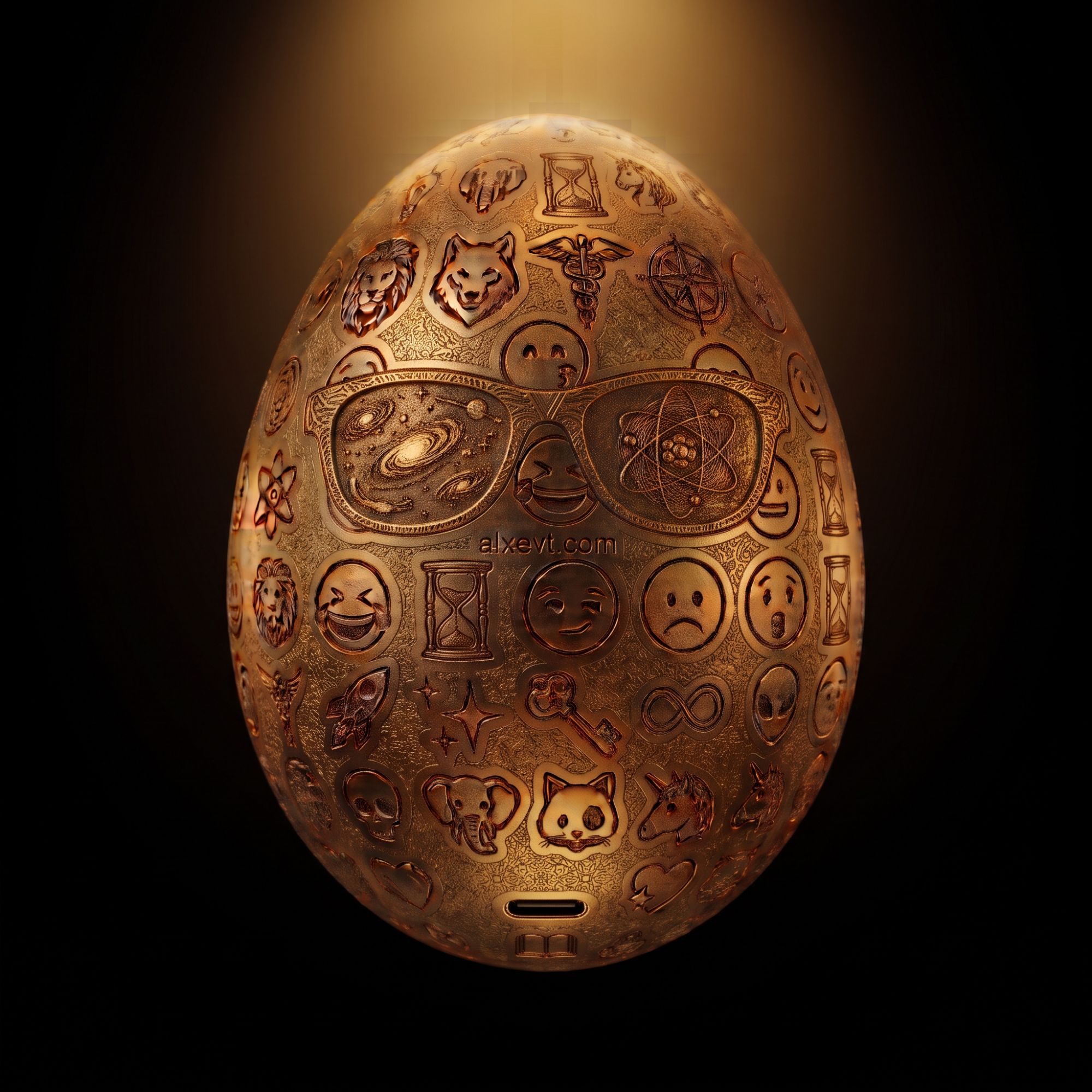
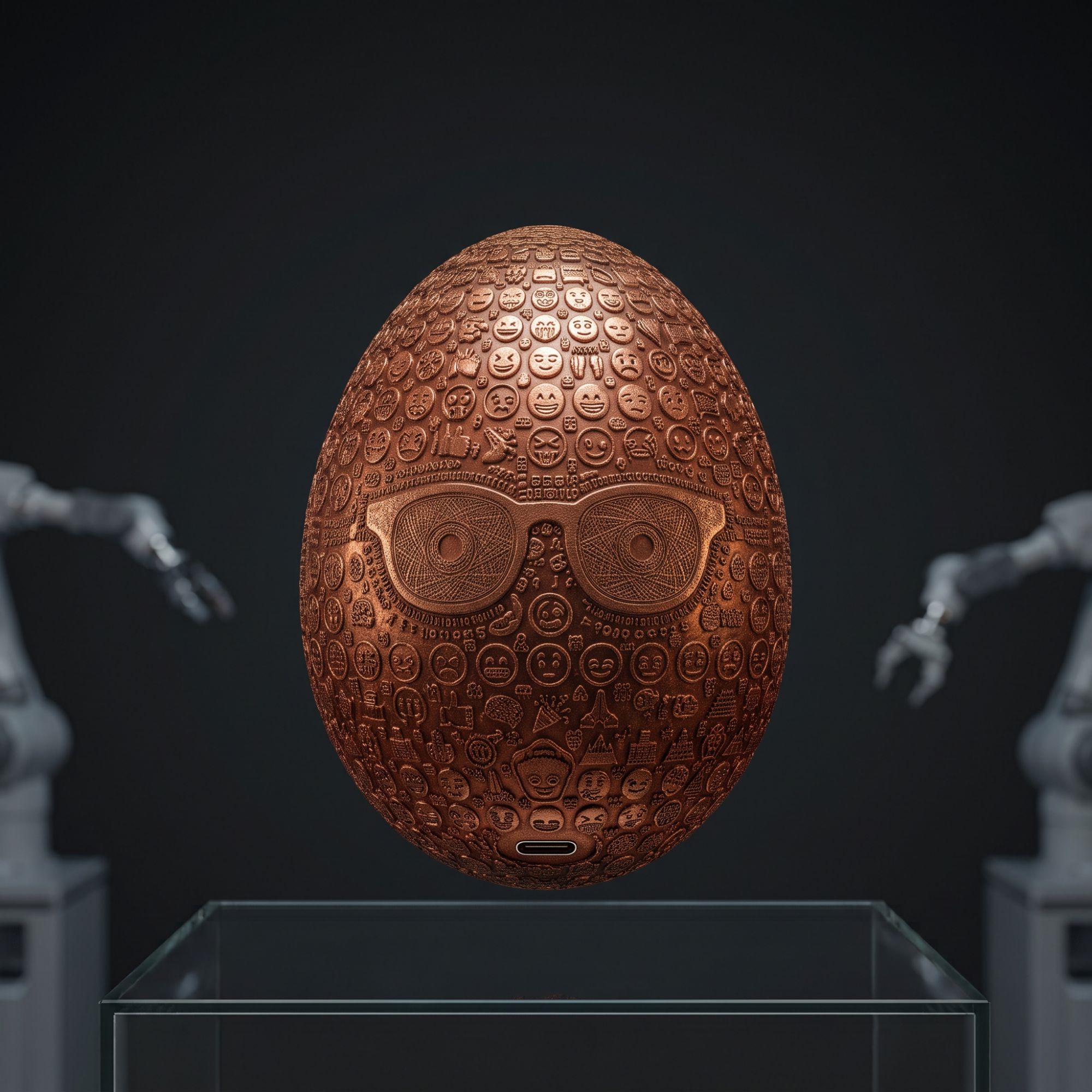
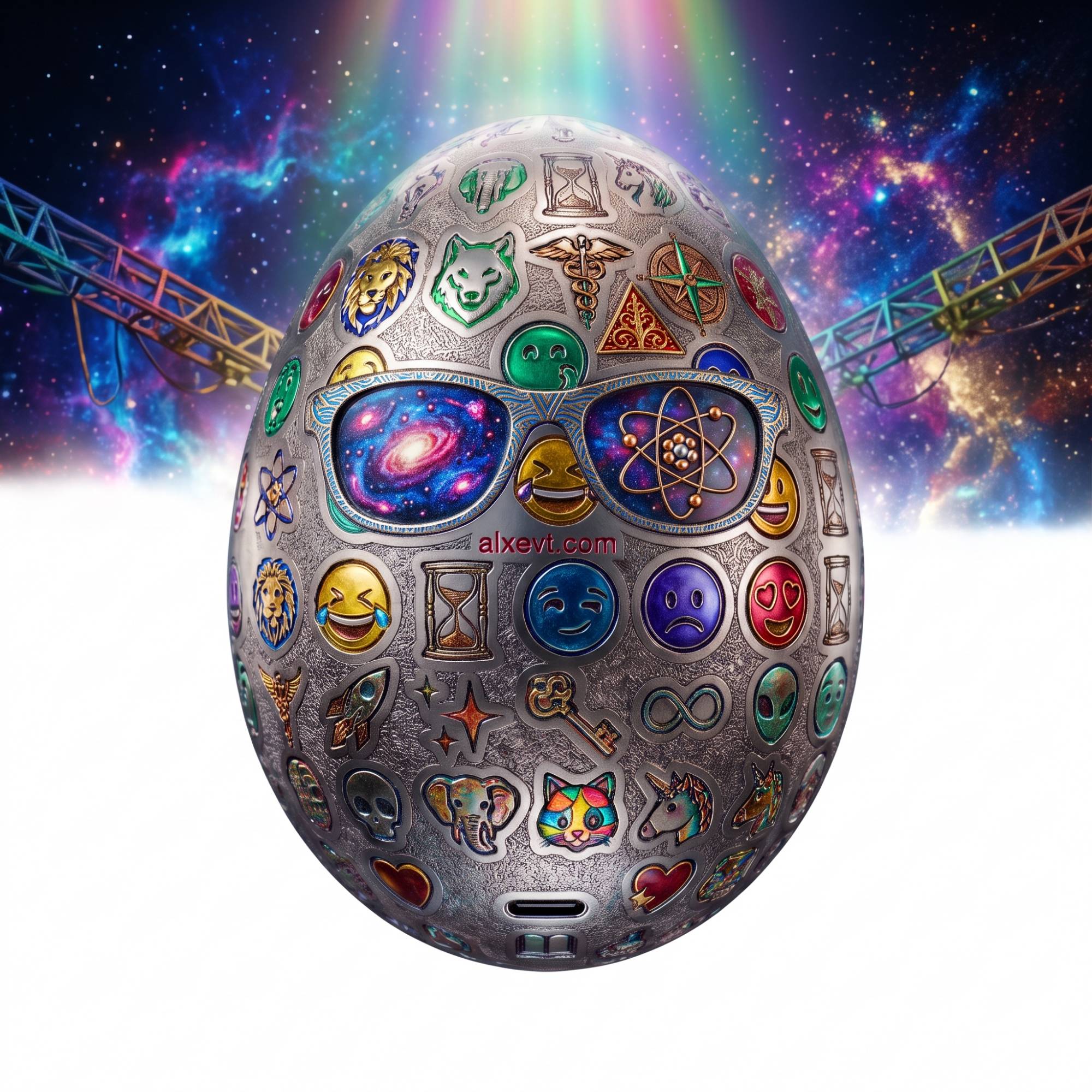
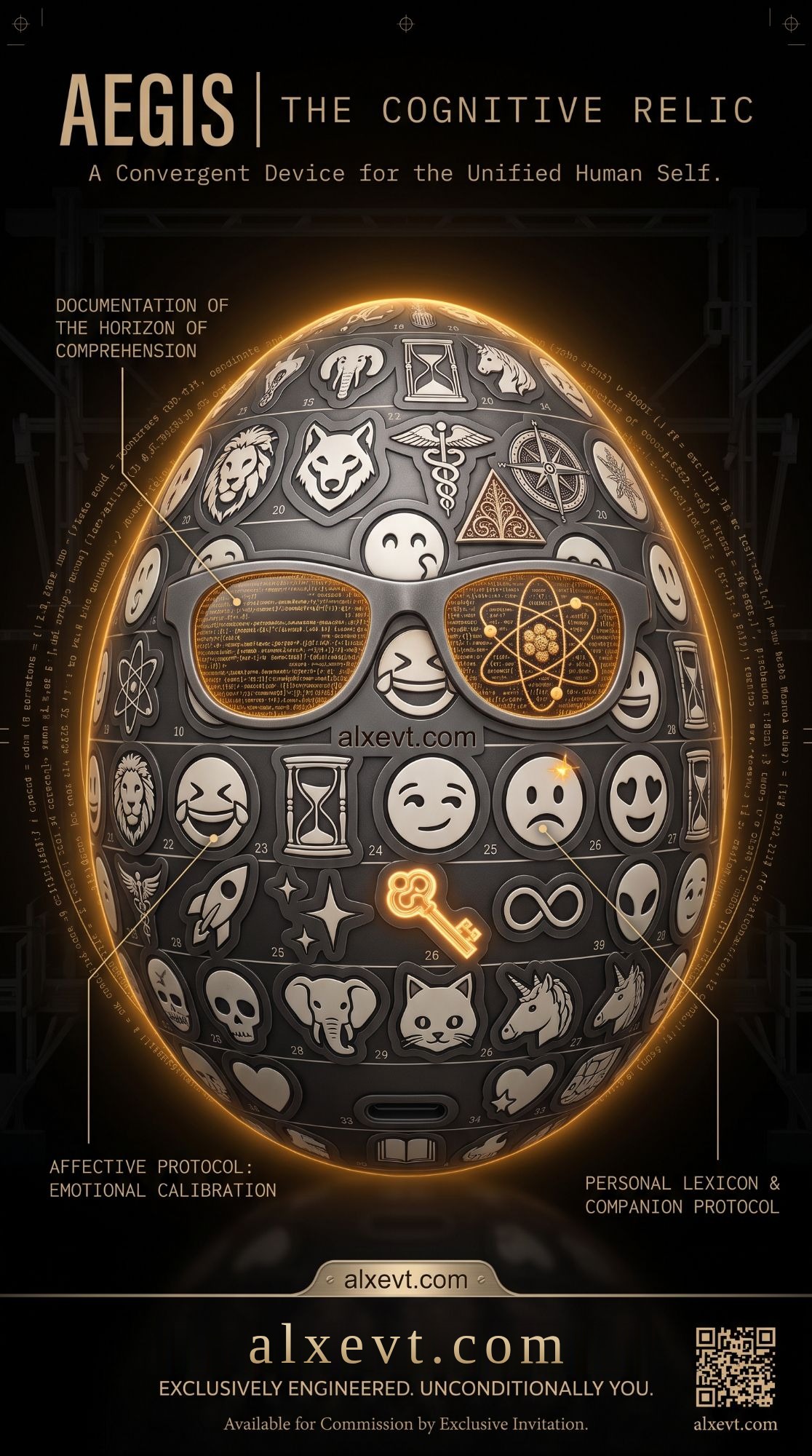
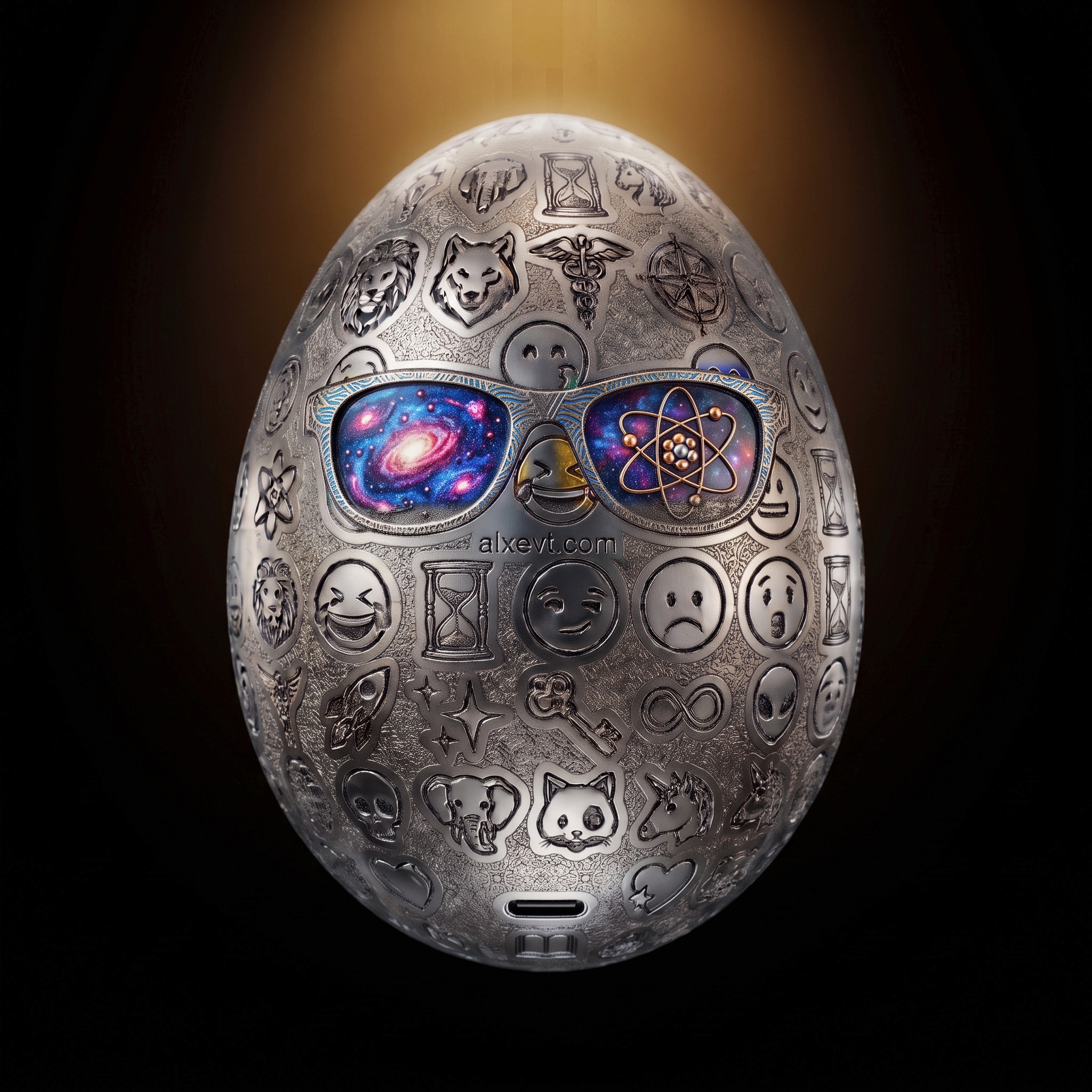
The marks were drawn by hand, but they were argued for in images first. These are the studies that settled the materials and the staging — kept because a brand should show its working. They were generated, not drawn, in an external AI session, and none of them is a mark: they are reference for the maximal register — posters, press, the hero artifact. Two of them invent things outright, and both are here for the same reason the rest are: what a study got wrong is as much of the record as what it got right. Each study opens at full resolution — click the image, or the link beneath it.